Body & Physical Health
Heart Rate Variability (HRV): The Hidden Metric of Stress and Healing
Heart Rate Variability (HRV): The Hidden Metric of Stress and Healing
Heart Rate Variability (HRV): The Hidden Metric of Stress and Healing

Written by

Keegan B. M.D.
|
Cardiologist, Hyemin Hospital, Seoul, South Korea
Written by
Keegan B. M.D.
|
Cardiologist, Hyemin Hospital, Seoul, South Korea
Reading time
Reading time
6 min
Published on
Published on

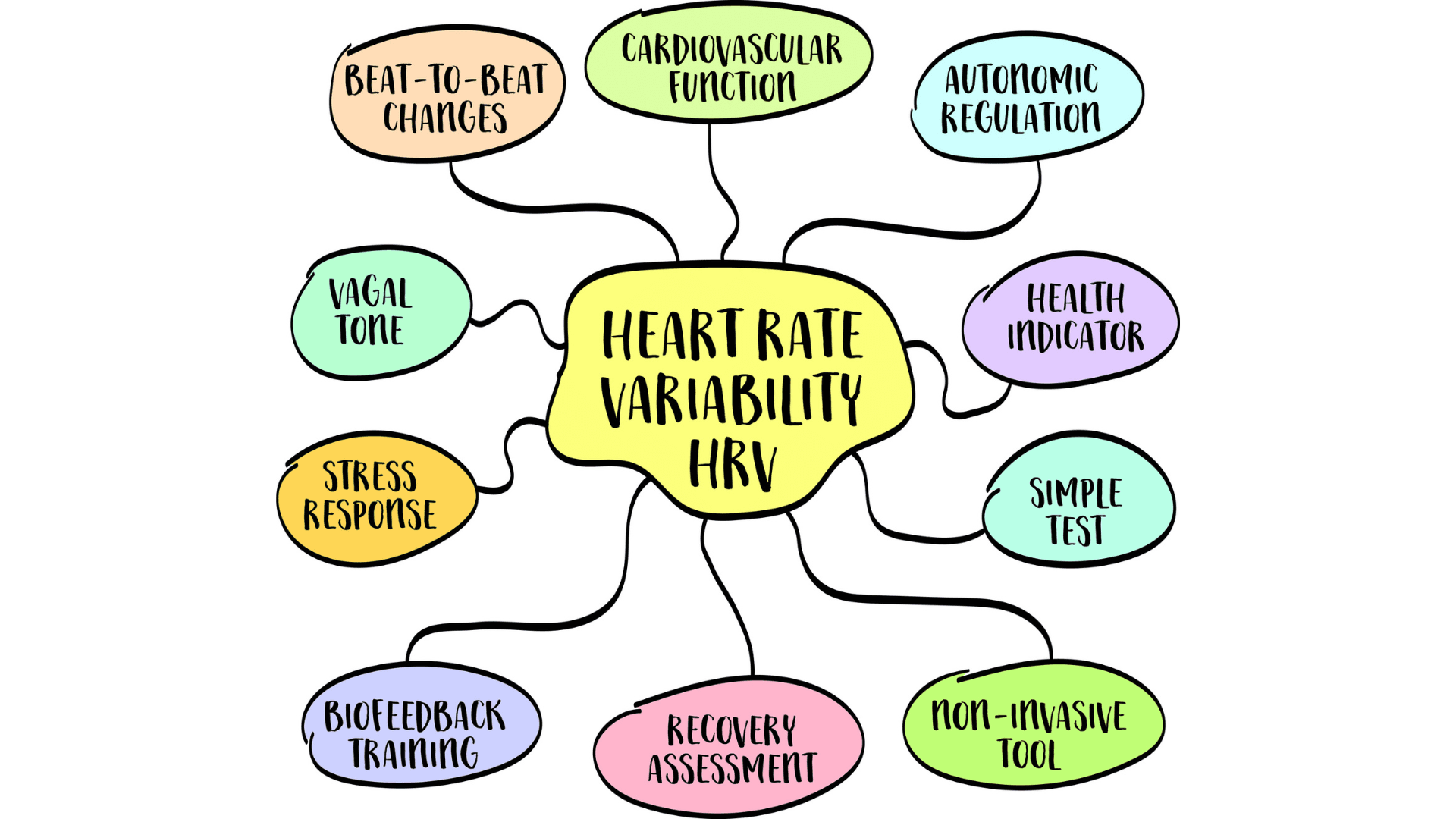
Heart Rate Variability (HRV) measures the subtle changes in time between heartbeats and is the most objective metric of your autonomic nervous system’s resilience to stress. According to a 2025 study, meditation immediately increases HRV by an average of +4.68ms, shifting the body into a state of recovery.
The Half-Truth of Your Health Checkup
Did you get a ‘Normal Heart Rate’ on your last checkup and feel relieved? As a cardiologist, I can tell you that’s only half the truth. Even when stress peaks, your beats per minute might look fine. But when doctors want to see how severely your autonomic nervous system has crashed, or how fast you are aging, we look at the subtle variations between those beats—your HRV (Heart Rate Variability).
High HRV vs. Low HRV: What’s Happening in Your Blood Vessels?
It might seem like a heart that beats as perfectly as a metronome is healthy, but the medical truth is the opposite.
High HRV (The Rhythm of Recovery):
The time between beats varies slightly. This proves your parasympathetic nervous system is working well, flexibly handling stress and healing inflammation on its own.
Low HRV (The Warning Alarm):
The intervals are stiff and uniform. It means your sympathetic nervous system (fight-or-flight mode) has you by the collar, keeping you in chronic tension. If you’re constantly tired despite sleeping well or experiencing heart palpitations, your HRV has likely collapsed.
The Science of Meditation and HRV: The +4.68ms Miracle
The good news is that you can retune this stiffened rhythm of life. According to a 3-week observational study of 90 participants published in JMIR (2025), RMSSD (a key HRV metric) increased by an average of +4.68ms immediately during meditation, and this recovery effect lasted for more than 30 minutes after practice. Meditation isn’t just a mood booster; it’s a powerful ‘neurological training’ that flips the switch on your parasympathetic nervous system.
The Action: Real-World Practice for Finding the Rhythm of Recovery
HRV doesn’t change overnight, but consistent habits can completely alter the trajectory of your autonomic nervous system. Guiding countless members over 24 years from a preventive medicine perspective, I’ve found that the fastest and most fundamental secret to increasing HRV isn’t just resting—it’s ‘Mind Cleansing.’
Going beyond superficial coping mechanisms like deep breathing, when you uproot the accumulated thoughts that subconsciously trigger your sympathetic nervous system, your heart finally releases its stiff tension and recovers its soft, healing rhythm. Your true Healthy Lifespan extends within that rhythm.
Want to experience it for yourself?
Discover what Mind Cleansing meditation is all about with a 50-minute trial session. Online or in-person. No experience needed.

More Resources
Guidance for Your Inner Journey

Why Do I Keep Replaying Conversations in My Head?
Why it happens, how to respond, and where guided meditation can help you begin.
Quick Answer
You may replay conversations to check for mistakes, understand someone’s reaction, or reduce uncertainty. When the review becomes repetitive and self-critical without producing a useful next step, it is often called rumination. Start by separating facts from assumptions, deciding whether any action is needed, and journaling the specific thoughts you want to let go of.
You leave a meeting, finish a phone call, or send a message. Hours later, one moment keeps coming back.
Did I sound rude? Why did they pause? Should I explain myself again?
If this feels familiar, a repeated thought is not proof that something went wrong. You can learn from a conversation without spending your evening trying to perfect it.
Why Do We Replay Conversations?
Researchers describe repetitive thinking after social situations as post-event rumination, particularly when it centers on perceived mistakes or shortcomings.[1] Here are three ways that pattern can show up.
You want certainty about someone’s reaction
A short answer or unreadable expression leaves room for interpretation. Replaying it can feel like investigating a problem. But the same memory cannot reliably tell you what another person was thinking.
You expect yourself to get every interaction right
If you believe you must always sound confident, warm, and thoughtful, an ordinary pause can feel like failure. Consider whether you would judge a friend as harshly for the same moment.
The conversation touches an older concern
A present exchange may remind you of being criticized, embarrassed, or misunderstood. Ask whether you are responding to what happened today or to a familiar worry about yourself.
For a broader discussion, read why anxiety keeps coming back.
Reflection vs. Rumination: What’s the Difference?
Reflection produces a lesson or decision. Rumination reopens the same question without new information.
Reflection | Rumination |
“I interrupted. Next time, I will pause.” | “Why am I always so awkward?” |
Identifies a specific action. | Searches for certainty about someone’s opinion. |
Allows you to return to your day. | Keeps drawing you back to the same moment. |
Ask yourself: “Am I learning something new, or repeating the same question?”
You do not have to settle every detail before moving on. A conversation can remain imperfect.
How to Stop Replaying Conversations in Your Head
Start with one manageable step. The aim is to respond differently when the replay begins.
1. Separate what happened from what you assumed
Write the observable event: “They gave a short answer.”
Then write your interpretation: “They must be upset with me.”
Those are different statements. They may have been distracted, busy, or simply brief. You do not need to replace a negative guess with a positive one; recognize what you do not know.
2. Decide whether one practical action is needed
If you interrupted someone or left a question unanswered, a brief apology or clarification may help.
Ask: “Is there something specific I can do?”
If yes, choose what and when. If no, another replay may not solve anything. NHS guidance recommends distinguishing actionable problems from hypothetical worries and making a plan where possible.[2]
Once you have chosen an appropriate action, notice when thinking returns to the same uncertainty.
3. Journal your recurring worries and choose what to let go of first

Set aside a few minutes to write the specific thoughts that keep returning.
“Did what I said make them dislike me?”
“I wish I had answered differently.”
“Why does their approval matter so much to me?”
Then identify, one by one, which thoughts you want to let go of. Start with the one weighing on you most.
Try these three prompts:
The conversation I keep returning to is…
The worry I have attached to it is…
The thought I want to let go of first is…
For example: “I want to let go of the thought that one awkward answer defines how people see me.”
Use this exercise to recognize what you are carrying. You do not need to record every detail or analyze yourself further. If writing becomes another replay, pause.
Journaling identifies a starting point. Learning how to let go is the next step.
How Mind Cleansing Meditation Approaches Overthinking
Mind Cleansing meditation focuses on letting go of accumulated thoughts and emotions. The worries you journaled may help you recognize what you want to work on: regret, embarrassment, resentment, or the need for approval.
Journaling puts those concerns into words. In Mind Cleansing, a live instructor guides you through the practice of letting them go. The aim is to discard what you have carried from the experience, rather than keep rehearsing a better conversation.
You can ask questions as you learn. You do not need to quiet your mind before beginning.
Explore what Mind Cleansing meditation involves to understand the method and the role of ongoing practice.

What Does the Research Say?
A meta-analysis published in the Journal of Affective Disorders combined 61 studies involving 4,229 participants. It found an overall benefit of mindfulness-based interventions for rumination, but no significant difference compared with cognitive behavioral therapy.[3]
This supports further exploration of meditation-based approaches to repetitive thinking. It does not directly establish the effectiveness of Meditation Town’s Mind Cleansing method for conversation replay.
The NCCIH notes that meditation research varies in quality and that meditation should not replace conventional care.[4] Choose support that fits your needs; pause and seek guidance if practice increases distress.
What Can You Explore in Your First Guided Session?
If you understand what you want to let go of but feel unsure how to begin, a trial lets you experience the guidance directly.
During Meditation Town’s 50-minute trial session, you can:
Learn how the Mind Cleansing method works.
Experience live, one-to-one guidance.
Ask your teacher questions about the practice.
You can bring a journal entry or a question about the thought that keeps returning. No previous meditation experience is needed.
Choose live online, so you can explore the practice from where you are, or in person in Los Angeles. The Get Started page also explains membership options for continued practice.
Book Your Trial Session →
Frequently Asked Questions
Is it normal to replay conversations in your head?
Occasionally revisiting a conversation does not, by itself, mean you have a mental health condition. Consider how persistent, distressing, and disruptive it becomes. If the pattern regularly interferes with sleep, work, or relationships, or leads you to avoid people, speak with a licensed mental health professional. You do not need to wait until it feels unmanageable to seek support.
Why do I replay conversations more at night?
With fewer activities competing for attention, lingering worries may become more noticeable. Worry about losing sleep can add another layer.
Before bed, take a few minutes away from bed to journal the conversation and the specific worry attached to it. Choose one thought you want to release: “I want to let go of worrying that they think badly of me.”
You do not have to resolve everything tonight. Recognizing what you want to release is a starting point.
Can guided meditation help me stop overthinking conversations?
Some meditation-based approaches may reduce rumination, although results vary.[3] Mind Cleansing teaches a guided practice for letting go of accumulated thoughts and emotions.
A first session offers a chance to learn the method, ask questions, and experience the guidance. It cannot guarantee that every recurring habit will disappear, but it can help you find a clearer direction: moving from wishing the thoughts would stop toward learning how to let them go.
References
Edgar, E. V., et al. (2024). Post-event rumination and social anxiety: a systematic review and meta-analysis. Journal of Psychiatric Research. pubmed.ncbi.nlm.nih.gov
NHS Every Mind Matters. Tackling your worries. nhs.uk
Mao, L., Li, P., Wu, Y., Luo, L., & Hu, M. (2023). The effectiveness of mindfulness-based interventions for ruminative thinking: A systematic review and meta-analysis of randomized controlled trials. Journal of Affective Disorders, 321, 83–95. doi.org
National Center for Complementary and Integrative Health. Meditation and Mindfulness: Effectiveness and Safety. nccih.nih.gov

What Is Mind Cleansing Meditation? A Root-Cause Removal
Mind Cleansing meditation is a structured, guided practice that removes accumulated thoughts and emotions at their root — not just calms them in the moment. Unlike mindfulness-based approaches that observe or manage recurring mental patterns, Mind Cleansing discards the underlying material that keeps generating those patterns. Research on guided meditation consistently shows deeper and more lasting results than self-directed practice alone — and this method extends that principle further, targeting the source rather than the symptom.
Most meditation practices work the same way: they calm the surface of the mind. A racing thought slows down. A tense body relaxes. For the length of the session, things feel quieter.
But for a lot of people, that quiet doesn't last. The same worry returns the next day. The same stress resurfaces the next week. That's not a failure of willpower or discipline — it's simply what happens when a practice calms the surface of the mind without touching what's underneath it.
Mind Cleansing meditation takes a different approach.
Calming the Mind vs. Discarding the Root
Most meditation techniques are built around calming — slowing the breath, observing thoughts without reacting, returning attention to the present moment. These are genuinely useful skills, and they help in the moment they're practiced.
Mind Cleansing meditation doesn't stop there. It targets the accumulated thinking that keeps generating the thought in the first place — and discards it at the root. Instead of waiting for the mind to settle, the practice removes what has built up, layer by layer, through guided, structured sessions.
The difference matters most for anything recurring: the same stress response, the same anxious spiral, the same sleepless night showing up again and again. Calming the moment means repeating the process every time it returns. Discarding the root means it has less reason to return at all.
The Process: Recall, Reflect, Release
Mind Cleansing meditation follows a structured, three-part process in each guided session:
Recall
Bringing accumulated thoughts and emotions to the surface, without analyzing or judging them. This isn't about digging for a specific memory; it's about letting what's already there become visible.
Reflect
Looking honestly at what surfaces. Not to relive it, but to see it clearly enough to recognize it no longer needs to be carried.
Release
Discarding the recalled and reflected material through the guided technique itself. This is the step that distinguishes the practice from most calming-based meditation: rather than simply setting a thought aside, the practice removes it from the pattern that keeps regenerating it.
Over repeated sessions, this process is applied to the accumulated thinking built up over years — not just a single day's stress.
What a Session Actually Looks Like
Every session is guided in real time by a trained instructor — never a recording. Sessions are available in-person at any of our Los Angeles locations, or live online. No prior meditation experience is needed; the method is designed to be followed step by step, session by session.
A first session typically starts with a short conversation — not a lengthy intake, just enough for the instructor to understand what's brought you in and answer any questions about how the process works. From there, the instructor guides you verbally through the Recall–Reflect–Release structure in real time, adjusting pace based on what comes up. You stay fully aware and in control throughout; nothing about the process involves losing awareness or being "put under."
Sessions build on each other. What surfaces in an early session is often different from what surfaces weeks in — which is part of why the process is designed around repeated, guided sessions rather than a single technique to practice alone.
Most people start with a 50-minute trial meditation session to get a direct feel for the guided process before committing to anything further.
What the Research Shows
Two lines of evidence support this approach: research on this specific method, and broader research on guided mind-body meditation that supports the same underlying principles.
Research on this method directly
A study measuring 149 practitioners nationwide — kindergarten through university educators — using the internationally validated SCL-90 diagnostic tool found statistically significant improvement across all nine measured mental health domains, including somatization, depression, anxiety, and hostility. The improvement scaled with how long participants had practiced: more consistent practice corresponded with greater measured benefit. (Prof. Lee In-su, Korea National University of Transportation; Journal of Holistic Education, 2012.)
In a separate randomized controlled trial published in Cancer Nursing (2017), 46 breast cancer survivors were randomly assigned to either this method or a standard self-management education program. All four tracked outcomes — depression, anxiety, perceived stress, and quality of life — showed statistically significant improvement in the meditation group compared to the control group.
Broader research supporting guided mind cleansing meditation
A 2025 randomized controlled trial from Harvard Medical School followed 211 chronically stressed adults across three 8-week programs — 1:1 guided meditation, yoga, and stress education. The meditation group led consistently across all five psychological measures, and improvements extended to measurable biological markers: cortisol, blood pressure, BMI, blood glucose, and cholesterol. Gene expression changes were also documented — among the first direct evidence that meditation's effects reach the molecular level. At a 6-month follow-up, the improvements had held. (Denninger, Lazar, et al., Harvard Medical School/MGH; Frontiers in Psychology, 2025.)
Earlier Harvard-affiliated MRI research (Hölzel, Lazar et al., 2011) found that 8 weeks of mindfulness-based practice produced measurable increases in gray matter density in brain regions tied to memory and self-awareness, alongside a decrease in amygdala density — the brain's stress and anxiety center.
What Mind Cleansing Meditation Is Not
It isn't hypnosis. You remain fully aware and in control throughout every session. Nothing about the process involves losing consciousness or being guided into a trance-like state.
It doesn't require any particular belief system. The process doesn't ask you to adopt a philosophy or belief in order for it to work. It's a structured technique, practiced the same way regardless of background.
It isn't a one-time fix. Like physical therapy for the mind, the process works through repeated, guided sessions rather than a single technique you learn and then do alone.
It isn't a replacement for medical or psychiatric care. For diagnosed mental health conditions, Mind Cleansing meditation is often practiced alongside — not instead of — care from a licensed medical or mental health provider.
Who This Is For
Mind Cleansing meditation is used by people dealing with recurring stress, anxiety, panic attacks, insomnia, and burnout — not as a one-time fix, but as a structured, repeatable process for discarding what keeps generating those patterns in the first place. It's practiced by people across a wide range of professions and life stages, from executives to healthcare workers to students, each working through the same guided structure.
Curious what this actually feels like?
Start with a 50-minute guided meditation session — online or in person.
Book Your Trial Session →
References
Lee In-su. (2012). Effects of Mind Cleansing Meditation on Mental Health. Journal of Holistic Education, Korea National University of Transportation.
Kim et al. (2017). Effects of Mind Cleansing Meditation on Breast Cancer Survivors. Cancer Nursing. pubmed.ncbi.nlm.nih.gov
Denninger JW, Lazar SW, et al. (2025). Mind-body interventions in chronically stressed adults: gene expression, biomarker, and psychological outcomes. Frontiers in Psychology. Harvard Medical School/MGH. pubmed.ncbi.nlm.nih.gov
Hölzel BK, Lazar SW, et al. (2011). Mindfulness practice leads to increases in regional brain gray matter density. Psychiatry Research: Neuroimaging. pubmed.ncbi.nlm.nih.gov
NIH National Center for Complementary and Integrative Health. (2022). Meditation and Mindfulness: What You Need to Know. nccih.nih.gov

When the Industry Goes Dark: How One Entertainment Professional Found Grace Under Pressure
Paul knew he could barely afford it. He chose it anyway — because his mental well-being left him no other option. What followed was one of the most honest accounts of what meditation actually does over time.
Quick Answer
Entertainment industry professionals face a form of chronic stress that combines financial instability, identity disruption, and creative loss simultaneously — a combination that research shows produces anxiety and depression at rates 4x higher than the general population. Mind Cleansing meditation addresses the accumulated mental and emotional load underneath these pressures — not by managing them in the moment, but by releasing what has built up beneath them. Paul’s account over several months shows what becomes possible when that release begins.
In 24 years of guiding people through stress, I have noticed that some of the most honest accounts of what meditation actually does come from people who came to it out of necessity rather than curiosity. Not as a lifestyle addition, but as a last resort. Paul is one of those people. He works in the entertainment industry. And when the strikes came, so did everything else — the unemployment, the financial pressure, the loss of routine, the uncertainty about when or whether the work would return.
What the entertainment industry does to the nervous system
Hollywood’s mental health crisis has been building for years, but the 2023 strikes accelerated it into something acute. U.S. production was down 40% in Q2 2024 compared to pre-strike levels, and for many industry workers, the slowdown did not end when the strikes did. The work simply did not return at the pace anyone had anticipated.
What distinguishes entertainment industry stress from other professional stress is not the intensity — it is the structure. In most careers, identity and income are separate enough that a period of unemployment, while stressful, does not destabilize both simultaneously.
In the entertainment industry, what you do and who you are tend to be the same thing. An actor who is not working is not just financially pressured — they are without the primary context through which they experience themselves. A writer whose projects are on hold is not just waiting for work — they are separated from the creative process that defines their days, their relationships, and their sense of contribution.
When the strikes removed both the work and the possibility of work at once, many industry professionals found themselves without the external structures that had been managing their internal ones.
80%
Entertainment workers who reported anxiety or depression in a 2019 industry study
Medium / Shaina Fawn, LCSW · 2021
4×
More likely to consider suicide than the general population
2019 US entertainment industry study
40%
U.S. production decline in Q2 2024 vs pre-strike Hollywood
ProdPro via Deadline, 2024
What makes the entertainment industry’s stress pattern distinctive is not just the pressure — it is the uncertainty. The lack of job security, freelance cycles, and irregular hours create a chronic state of anticipatory anxiety — the nervous system never fully settles because there is always another audition, another pitch, another project that may or may not materialize. When the strikes removed even those possibilities, many workers were left with nothing to anticipate at all.
Why standard stress relief doesn’t reach this kind of pressure
The standard advice for stress — exercise, sleep, time away from work — addresses the surface layer of what stress produces. It does not address what accumulates underneath: the unresolved experiences, the unanswered questions about the future, the identity disruption that comes from extended periods without the work that defines you.
For entertainment industry professionals navigating a strike-driven shutdown, these accumulations don’t clear with a vacation or a workout. They compound. Each week without work adds to what is already there. Each conversation about when things will return adds a layer of anticipatory anxiety onto an already loaded system.
The nervous system, which was managing moment-to-moment pressure by staying alert, is now managing that same alertness without any of the external activity that previously gave it direction.
This is the context in which Paul made his decision. Not a casual addition to a comfortable life, but a deliberate choice in a difficult one — because the alternative, carrying the accumulated weight of everything the industry had put on hold, felt unsustainable.
Paul’s account — in his own words
“I love this meditation. I work in the entertainment industry and was under a lot of stress due to the current strikes, and am currently unemployed. Although it’s difficult to afford this practice, I felt it was vital for my mental well-being to take up this meditation.
It has helped me cope with everyday problems small and large. I am able to handle things with a grace I wasn’t aware I possessed. This practice has enabled me to roll with the punches and live my life better.”
Paul · Director of Animation · Meditation Town practitioner
There is a phrase in Paul’s account that stays with me: “a grace I wasn’t aware I possessed.” This is not the language of someone who learned a coping technique. This is someone who discovered a capacity that was already there — underneath the accumulated weight of everything the industry had put on him.
Why he chose it even when he could barely afford it
Paul’s honesty about the financial dimension of his decision is unusual — and important. He was unemployed. He explicitly said it was difficult to afford the practice. And he chose it anyway, describing it as “vital for my mental well-being.” This is not a testimonial from someone who had every resource available to them. It is an account from someone who made a genuine trade-off and decided that the practice was worth it.
That word — vital — carries weight. Not helpful, not interesting, not something he wanted to try. Vital. The kind of language people use when they have assessed their situation honestly and concluded that this is not optional. In a period of unemployment, when every expense is scrutinized, choosing to invest in a meditation practice signals something about the cost of the alternative: continuing to carry the accumulated weight without any means of releasing it.
What this tells us about the need
When someone facing real financial pressure chooses to invest in mental well-being over other options, it signals something important: the alternative — carrying the accumulated stress of unemployment, uncertainty, and industry disruption without any release — felt more costly than the practice itself. This is a cost-benefit calculation that many entertainment professionals quietly make without ever articulating it this clearly.
Several months later — what revealed itself with time
Paul’s update — several months into practice
“I’m several months into my meditation practice, and the more I do, the more is revealed to me. Reflecting on your past and changing your relationship to it makes a huge difference in your present life. I highly recommend trying this meditation.”
Paul W. · Follow-up account
This second account matters as much as the first. The initial experience gave Paul a way to cope — a way to handle things with grace he hadn’t known he had. The longer-term experience gave him something different: a changed relationship to the past and, through that, a changed present. These are not the same thing, and they do not happen on the same timeline.
Paul’s phrase — “the more I do, the more is revealed to me” — describes something we observe consistently in longer-term practitioners. The first weeks of practice produce relief: the acute layer of current stress reduces, and there is more space to move through the day. But with months of consistent practice, something else begins to happen. The practice starts to surface what has been sitting underneath the current stress — older patterns, earlier experiences, the accumulated history of how a person has learned to respond to uncertainty, rejection, and instability. In an industry defined by all three, this is significant territory.
What Paul describes as “changing your relationship to the past” is not a reframing or a cognitive shift. It is a release — the accumulated emotional weight of earlier experiences reducing enough that those experiences no longer carry the same pull on how he meets the present. When that happens, the present genuinely changes. Not because circumstances have improved, but because what he is bringing to circumstances has lightened.
What we observe with consistent practice
Early sessions address the acute layer — the pressure currently active in the nervous system. Over months, consistent practice begins to reach what has accumulated underneath: older patterns, older experiences, older ways of relating to uncertainty. When those shift, the present changes not because the circumstances have changed, but because the weight behind how we meet circumstances has reduced. Paul’s phrase — “changing your relationship to it makes a huge difference in your present life” — describes this precisely.
Mind Cleansing meditation — what Paul actually practiced
Mind Cleansing is a guided, live meditation practice focused on releasing accumulated thoughts and emotional weight — not managing them in the moment, but systematically letting go of what has built up beneath them. For someone navigating the specific stress of entertainment industry unemployment — financial pressure, identity disruption, creative loss, and chronic uncertainty occurring simultaneously — this approach addresses the root of what keeps the nervous system on high alert even when nothing is actively threatening. The grace Paul described is not a technique. It is what becomes available when the accumulated load reduces enough to let it surface. Learn how Mind Cleansing works →
Experiencing Industry Stress or Unemployment?
A 50-minute trial session is available — online or in-person.
No prior meditation experience needed.
References
Fawn S. (2021). The Mental Health Crisis in Hollywood. Medium. medium.com
Deadline. (2024). Hollywood’s Mental Health Crisis: Calm, Headspace, Thrive & More. Deadline, July 2024. deadline.com
Deadline. (2024). Hollywood slowdown takes mental health toll. Deadline, July 2024. deadline.com
Harbor Mental Health. (2022). Mental Health Issues in the Entertainment Industry. harbormentalhealth.com
PMAC. (2025). Mental Health in the Entertainment Industry. pmac.uk
NIH National Center for Complementary and Integrative Health. (2022). Meditation and Mindfulness: What You Need to Know. nccih.nih.gov
Why Do I Keep Replaying Conversations in My Head?
Why it happens, how to respond, and where guided meditation can help you begin.
Quick Answer
You may replay conversations to check for mistakes, understand someone’s reaction, or reduce uncertainty. When the review becomes repetitive and self-critical without producing a useful next step, it is often called rumination. Start by separating facts from assumptions, deciding whether any action is needed, and journaling the specific thoughts you want to let go of.
You leave a meeting, finish a phone call, or send a message. Hours later, one moment keeps coming back.
Did I sound rude? Why did they pause? Should I explain myself again?
If this feels familiar, a repeated thought is not proof that something went wrong. You can learn from a conversation without spending your evening trying to perfect it.
Why Do We Replay Conversations?
Researchers describe repetitive thinking after social situations as post-event rumination, particularly when it centers on perceived mistakes or shortcomings.[1] Here are three ways that pattern can show up.
You want certainty about someone’s reaction
A short answer or unreadable expression leaves room for interpretation. Replaying it can feel like investigating a problem. But the same memory cannot reliably tell you what another person was thinking.
You expect yourself to get every interaction right
If you believe you must always sound confident, warm, and thoughtful, an ordinary pause can feel like failure. Consider whether you would judge a friend as harshly for the same moment.
The conversation touches an older concern
A present exchange may remind you of being criticized, embarrassed, or misunderstood. Ask whether you are responding to what happened today or to a familiar worry about yourself.
For a broader discussion, read why anxiety keeps coming back.
Reflection vs. Rumination: What’s the Difference?
Reflection produces a lesson or decision. Rumination reopens the same question without new information.
Reflection | Rumination |
“I interrupted. Next time, I will pause.” | “Why am I always so awkward?” |
Identifies a specific action. | Searches for certainty about someone’s opinion. |
Allows you to return to your day. | Keeps drawing you back to the same moment. |
Ask yourself: “Am I learning something new, or repeating the same question?”
You do not have to settle every detail before moving on. A conversation can remain imperfect.
How to Stop Replaying Conversations in Your Head
Start with one manageable step. The aim is to respond differently when the replay begins.
1. Separate what happened from what you assumed
Write the observable event: “They gave a short answer.”
Then write your interpretation: “They must be upset with me.”
Those are different statements. They may have been distracted, busy, or simply brief. You do not need to replace a negative guess with a positive one; recognize what you do not know.
2. Decide whether one practical action is needed
If you interrupted someone or left a question unanswered, a brief apology or clarification may help.
Ask: “Is there something specific I can do?”
If yes, choose what and when. If no, another replay may not solve anything. NHS guidance recommends distinguishing actionable problems from hypothetical worries and making a plan where possible.[2]
Once you have chosen an appropriate action, notice when thinking returns to the same uncertainty.
3. Journal your recurring worries and choose what to let go of first
Set aside a few minutes to write the specific thoughts that keep returning.
“Did what I said make them dislike me?”
“I wish I had answered differently.”
“Why does their approval matter so much to me?”
Then identify, one by one, which thoughts you want to let go of. Start with the one weighing on you most.
Try these three prompts:
The conversation I keep returning to is…
The worry I have attached to it is…
The thought I want to let go of first is…
For example: “I want to let go of the thought that one awkward answer defines how people see me.”
Use this exercise to recognize what you are carrying. You do not need to record every detail or analyze yourself further. If writing becomes another replay, pause.
Journaling identifies a starting point. Learning how to let go is the next step.
How Mind Cleansing Meditation Approaches Overthinking
Mind Cleansing meditation focuses on letting go of accumulated thoughts and emotions. The worries you journaled may help you recognize what you want to work on: regret, embarrassment, resentment, or the need for approval.
Journaling puts those concerns into words. In Mind Cleansing, a live instructor guides you through the practice of letting them go. The aim is to discard what you have carried from the experience, rather than keep rehearsing a better conversation.
You can ask questions as you learn. You do not need to quiet your mind before beginning.
Explore what Mind Cleansing meditation involves to understand the method and the role of ongoing practice.
What Does the Research Say?
A meta-analysis published in the Journal of Affective Disorders combined 61 studies involving 4,229 participants. It found an overall benefit of mindfulness-based interventions for rumination, but no significant difference compared with cognitive behavioral therapy.[3]
This supports further exploration of meditation-based approaches to repetitive thinking. It does not directly establish the effectiveness of Meditation Town’s Mind Cleansing method for conversation replay.
The NCCIH notes that meditation research varies in quality and that meditation should not replace conventional care.[4] Choose support that fits your needs; pause and seek guidance if practice increases distress.
What Can You Explore in Your First Guided Session?
If you understand what you want to let go of but feel unsure how to begin, a trial lets you experience the guidance directly.
During Meditation Town’s 50-minute trial session, you can:
Learn how the Mind Cleansing method works.
Experience live, one-to-one guidance.
Ask your teacher questions about the practice.
You can bring a journal entry or a question about the thought that keeps returning. No previous meditation experience is needed.
Choose live online, so you can explore the practice from where you are, or in person in Los Angeles. The Get Started page also explains membership options for continued practice.
Book Your Trial Session →
Frequently Asked Questions
Is it normal to replay conversations in your head?
Occasionally revisiting a conversation does not, by itself, mean you have a mental health condition. Consider how persistent, distressing, and disruptive it becomes. If the pattern regularly interferes with sleep, work, or relationships, or leads you to avoid people, speak with a licensed mental health professional. You do not need to wait until it feels unmanageable to seek support.
Why do I replay conversations more at night?
With fewer activities competing for attention, lingering worries may become more noticeable. Worry about losing sleep can add another layer.
Before bed, take a few minutes away from bed to journal the conversation and the specific worry attached to it. Choose one thought you want to release: “I want to let go of worrying that they think badly of me.”
You do not have to resolve everything tonight. Recognizing what you want to release is a starting point.
Can guided meditation help me stop overthinking conversations?
Some meditation-based approaches may reduce rumination, although results vary.[3] Mind Cleansing teaches a guided practice for letting go of accumulated thoughts and emotions.
A first session offers a chance to learn the method, ask questions, and experience the guidance. It cannot guarantee that every recurring habit will disappear, but it can help you find a clearer direction: moving from wishing the thoughts would stop toward learning how to let them go.
References
Edgar, E. V., et al. (2024). Post-event rumination and social anxiety: a systematic review and meta-analysis. Journal of Psychiatric Research. pubmed.ncbi.nlm.nih.gov
NHS Every Mind Matters. Tackling your worries. nhs.uk
Mao, L., Li, P., Wu, Y., Luo, L., & Hu, M. (2023). The effectiveness of mindfulness-based interventions for ruminative thinking: A systematic review and meta-analysis of randomized controlled trials. Journal of Affective Disorders, 321, 83–95. doi.org
National Center for Complementary and Integrative Health. Meditation and Mindfulness: Effectiveness and Safety. nccih.nih.gov
What Is Mind Cleansing Meditation? A Root-Cause Removal
Mind Cleansing meditation is a structured, guided practice that removes accumulated thoughts and emotions at their root — not just calms them in the moment. Unlike mindfulness-based approaches that observe or manage recurring mental patterns, Mind Cleansing discards the underlying material that keeps generating those patterns. Research on guided meditation consistently shows deeper and more lasting results than self-directed practice alone — and this method extends that principle further, targeting the source rather than the symptom.
Most meditation practices work the same way: they calm the surface of the mind. A racing thought slows down. A tense body relaxes. For the length of the session, things feel quieter.
But for a lot of people, that quiet doesn't last. The same worry returns the next day. The same stress resurfaces the next week. That's not a failure of willpower or discipline — it's simply what happens when a practice calms the surface of the mind without touching what's underneath it.
Mind Cleansing meditation takes a different approach.
Calming the Mind vs. Discarding the Root
Most meditation techniques are built around calming — slowing the breath, observing thoughts without reacting, returning attention to the present moment. These are genuinely useful skills, and they help in the moment they're practiced.
Mind Cleansing meditation doesn't stop there. It targets the accumulated thinking that keeps generating the thought in the first place — and discards it at the root. Instead of waiting for the mind to settle, the practice removes what has built up, layer by layer, through guided, structured sessions.
The difference matters most for anything recurring: the same stress response, the same anxious spiral, the same sleepless night showing up again and again. Calming the moment means repeating the process every time it returns. Discarding the root means it has less reason to return at all.
The Process: Recall, Reflect, Release
Mind Cleansing meditation follows a structured, three-part process in each guided session:
Recall
Bringing accumulated thoughts and emotions to the surface, without analyzing or judging them. This isn't about digging for a specific memory; it's about letting what's already there become visible.
Reflect
Looking honestly at what surfaces. Not to relive it, but to see it clearly enough to recognize it no longer needs to be carried.
Release
Discarding the recalled and reflected material through the guided technique itself. This is the step that distinguishes the practice from most calming-based meditation: rather than simply setting a thought aside, the practice removes it from the pattern that keeps regenerating it.
Over repeated sessions, this process is applied to the accumulated thinking built up over years — not just a single day's stress.
What a Session Actually Looks Like
Every session is guided in real time by a trained instructor — never a recording. Sessions are available in-person at any of our Los Angeles locations, or live online. No prior meditation experience is needed; the method is designed to be followed step by step, session by session.
A first session typically starts with a short conversation — not a lengthy intake, just enough for the instructor to understand what's brought you in and answer any questions about how the process works. From there, the instructor guides you verbally through the Recall–Reflect–Release structure in real time, adjusting pace based on what comes up. You stay fully aware and in control throughout; nothing about the process involves losing awareness or being "put under."
Sessions build on each other. What surfaces in an early session is often different from what surfaces weeks in — which is part of why the process is designed around repeated, guided sessions rather than a single technique to practice alone.
Most people start with a 50-minute trial meditation session to get a direct feel for the guided process before committing to anything further.
What the Research Shows
Two lines of evidence support this approach: research on this specific method, and broader research on guided mind-body meditation that supports the same underlying principles.
Research on this method directly
A study measuring 149 practitioners nationwide — kindergarten through university educators — using the internationally validated SCL-90 diagnostic tool found statistically significant improvement across all nine measured mental health domains, including somatization, depression, anxiety, and hostility. The improvement scaled with how long participants had practiced: more consistent practice corresponded with greater measured benefit. (Prof. Lee In-su, Korea National University of Transportation; Journal of Holistic Education, 2012.)
In a separate randomized controlled trial published in Cancer Nursing (2017), 46 breast cancer survivors were randomly assigned to either this method or a standard self-management education program. All four tracked outcomes — depression, anxiety, perceived stress, and quality of life — showed statistically significant improvement in the meditation group compared to the control group.
Broader research supporting guided mind cleansing meditation
A 2025 randomized controlled trial from Harvard Medical School followed 211 chronically stressed adults across three 8-week programs — 1:1 guided meditation, yoga, and stress education. The meditation group led consistently across all five psychological measures, and improvements extended to measurable biological markers: cortisol, blood pressure, BMI, blood glucose, and cholesterol. Gene expression changes were also documented — among the first direct evidence that meditation's effects reach the molecular level. At a 6-month follow-up, the improvements had held. (Denninger, Lazar, et al., Harvard Medical School/MGH; Frontiers in Psychology, 2025.)
Earlier Harvard-affiliated MRI research (Hölzel, Lazar et al., 2011) found that 8 weeks of mindfulness-based practice produced measurable increases in gray matter density in brain regions tied to memory and self-awareness, alongside a decrease in amygdala density — the brain's stress and anxiety center.
What Mind Cleansing Meditation Is Not
It isn't hypnosis. You remain fully aware and in control throughout every session. Nothing about the process involves losing consciousness or being guided into a trance-like state.
It doesn't require any particular belief system. The process doesn't ask you to adopt a philosophy or belief in order for it to work. It's a structured technique, practiced the same way regardless of background.
It isn't a one-time fix. Like physical therapy for the mind, the process works through repeated, guided sessions rather than a single technique you learn and then do alone.
It isn't a replacement for medical or psychiatric care. For diagnosed mental health conditions, Mind Cleansing meditation is often practiced alongside — not instead of — care from a licensed medical or mental health provider.
Who This Is For
Mind Cleansing meditation is used by people dealing with recurring stress, anxiety, panic attacks, insomnia, and burnout — not as a one-time fix, but as a structured, repeatable process for discarding what keeps generating those patterns in the first place. It's practiced by people across a wide range of professions and life stages, from executives to healthcare workers to students, each working through the same guided structure.
Curious what this actually feels like?
Start with a 50-minute guided meditation session — online or in person.
Book Your Trial Session →
References
Lee In-su. (2012). Effects of Mind Cleansing Meditation on Mental Health. Journal of Holistic Education, Korea National University of Transportation.
Kim et al. (2017). Effects of Mind Cleansing Meditation on Breast Cancer Survivors. Cancer Nursing. pubmed.ncbi.nlm.nih.gov
Denninger JW, Lazar SW, et al. (2025). Mind-body interventions in chronically stressed adults: gene expression, biomarker, and psychological outcomes. Frontiers in Psychology. Harvard Medical School/MGH. pubmed.ncbi.nlm.nih.gov
Hölzel BK, Lazar SW, et al. (2011). Mindfulness practice leads to increases in regional brain gray matter density. Psychiatry Research: Neuroimaging. pubmed.ncbi.nlm.nih.gov
NIH National Center for Complementary and Integrative Health. (2022). Meditation and Mindfulness: What You Need to Know. nccih.nih.gov
When the Industry Goes Dark: How One Entertainment Professional Found Grace Under Pressure
Paul knew he could barely afford it. He chose it anyway — because his mental well-being left him no other option. What followed was one of the most honest accounts of what meditation actually does over time.
Quick Answer
Entertainment industry professionals face a form of chronic stress that combines financial instability, identity disruption, and creative loss simultaneously — a combination that research shows produces anxiety and depression at rates 4x higher than the general population. Mind Cleansing meditation addresses the accumulated mental and emotional load underneath these pressures — not by managing them in the moment, but by releasing what has built up beneath them. Paul’s account over several months shows what becomes possible when that release begins.
In 24 years of guiding people through stress, I have noticed that some of the most honest accounts of what meditation actually does come from people who came to it out of necessity rather than curiosity. Not as a lifestyle addition, but as a last resort. Paul is one of those people. He works in the entertainment industry. And when the strikes came, so did everything else — the unemployment, the financial pressure, the loss of routine, the uncertainty about when or whether the work would return.
What the entertainment industry does to the nervous system
Hollywood’s mental health crisis has been building for years, but the 2023 strikes accelerated it into something acute. U.S. production was down 40% in Q2 2024 compared to pre-strike levels, and for many industry workers, the slowdown did not end when the strikes did. The work simply did not return at the pace anyone had anticipated.
What distinguishes entertainment industry stress from other professional stress is not the intensity — it is the structure. In most careers, identity and income are separate enough that a period of unemployment, while stressful, does not destabilize both simultaneously.
In the entertainment industry, what you do and who you are tend to be the same thing. An actor who is not working is not just financially pressured — they are without the primary context through which they experience themselves. A writer whose projects are on hold is not just waiting for work — they are separated from the creative process that defines their days, their relationships, and their sense of contribution.
When the strikes removed both the work and the possibility of work at once, many industry professionals found themselves without the external structures that had been managing their internal ones.
80%
Entertainment workers who reported anxiety or depression in a 2019 industry study
Medium / Shaina Fawn, LCSW · 2021
4×
More likely to consider suicide than the general population
2019 US entertainment industry study
40%
U.S. production decline in Q2 2024 vs pre-strike Hollywood
ProdPro via Deadline, 2024
What makes the entertainment industry’s stress pattern distinctive is not just the pressure — it is the uncertainty. The lack of job security, freelance cycles, and irregular hours create a chronic state of anticipatory anxiety — the nervous system never fully settles because there is always another audition, another pitch, another project that may or may not materialize. When the strikes removed even those possibilities, many workers were left with nothing to anticipate at all.
Why standard stress relief doesn’t reach this kind of pressure
The standard advice for stress — exercise, sleep, time away from work — addresses the surface layer of what stress produces. It does not address what accumulates underneath: the unresolved experiences, the unanswered questions about the future, the identity disruption that comes from extended periods without the work that defines you.
For entertainment industry professionals navigating a strike-driven shutdown, these accumulations don’t clear with a vacation or a workout. They compound. Each week without work adds to what is already there. Each conversation about when things will return adds a layer of anticipatory anxiety onto an already loaded system.
The nervous system, which was managing moment-to-moment pressure by staying alert, is now managing that same alertness without any of the external activity that previously gave it direction.
This is the context in which Paul made his decision. Not a casual addition to a comfortable life, but a deliberate choice in a difficult one — because the alternative, carrying the accumulated weight of everything the industry had put on hold, felt unsustainable.
Paul’s account — in his own words
“I love this meditation. I work in the entertainment industry and was under a lot of stress due to the current strikes, and am currently unemployed. Although it’s difficult to afford this practice, I felt it was vital for my mental well-being to take up this meditation.
It has helped me cope with everyday problems small and large. I am able to handle things with a grace I wasn’t aware I possessed. This practice has enabled me to roll with the punches and live my life better.”
Paul · Director of Animation · Meditation Town practitioner
There is a phrase in Paul’s account that stays with me: “a grace I wasn’t aware I possessed.” This is not the language of someone who learned a coping technique. This is someone who discovered a capacity that was already there — underneath the accumulated weight of everything the industry had put on him.
Why he chose it even when he could barely afford it
Paul’s honesty about the financial dimension of his decision is unusual — and important. He was unemployed. He explicitly said it was difficult to afford the practice. And he chose it anyway, describing it as “vital for my mental well-being.” This is not a testimonial from someone who had every resource available to them. It is an account from someone who made a genuine trade-off and decided that the practice was worth it.
That word — vital — carries weight. Not helpful, not interesting, not something he wanted to try. Vital. The kind of language people use when they have assessed their situation honestly and concluded that this is not optional. In a period of unemployment, when every expense is scrutinized, choosing to invest in a meditation practice signals something about the cost of the alternative: continuing to carry the accumulated weight without any means of releasing it.
What this tells us about the need
When someone facing real financial pressure chooses to invest in mental well-being over other options, it signals something important: the alternative — carrying the accumulated stress of unemployment, uncertainty, and industry disruption without any release — felt more costly than the practice itself. This is a cost-benefit calculation that many entertainment professionals quietly make without ever articulating it this clearly.
Several months later — what revealed itself with time
Paul’s update — several months into practice
“I’m several months into my meditation practice, and the more I do, the more is revealed to me. Reflecting on your past and changing your relationship to it makes a huge difference in your present life. I highly recommend trying this meditation.”
Paul W. · Follow-up account
This second account matters as much as the first. The initial experience gave Paul a way to cope — a way to handle things with grace he hadn’t known he had. The longer-term experience gave him something different: a changed relationship to the past and, through that, a changed present. These are not the same thing, and they do not happen on the same timeline.
Paul’s phrase — “the more I do, the more is revealed to me” — describes something we observe consistently in longer-term practitioners. The first weeks of practice produce relief: the acute layer of current stress reduces, and there is more space to move through the day. But with months of consistent practice, something else begins to happen. The practice starts to surface what has been sitting underneath the current stress — older patterns, earlier experiences, the accumulated history of how a person has learned to respond to uncertainty, rejection, and instability. In an industry defined by all three, this is significant territory.
What Paul describes as “changing your relationship to the past” is not a reframing or a cognitive shift. It is a release — the accumulated emotional weight of earlier experiences reducing enough that those experiences no longer carry the same pull on how he meets the present. When that happens, the present genuinely changes. Not because circumstances have improved, but because what he is bringing to circumstances has lightened.
What we observe with consistent practice
Early sessions address the acute layer — the pressure currently active in the nervous system. Over months, consistent practice begins to reach what has accumulated underneath: older patterns, older experiences, older ways of relating to uncertainty. When those shift, the present changes not because the circumstances have changed, but because the weight behind how we meet circumstances has reduced. Paul’s phrase — “changing your relationship to it makes a huge difference in your present life” — describes this precisely.
Mind Cleansing meditation — what Paul actually practiced
Mind Cleansing is a guided, live meditation practice focused on releasing accumulated thoughts and emotional weight — not managing them in the moment, but systematically letting go of what has built up beneath them. For someone navigating the specific stress of entertainment industry unemployment — financial pressure, identity disruption, creative loss, and chronic uncertainty occurring simultaneously — this approach addresses the root of what keeps the nervous system on high alert even when nothing is actively threatening. The grace Paul described is not a technique. It is what becomes available when the accumulated load reduces enough to let it surface. Learn how Mind Cleansing works →
Experiencing Industry Stress or Unemployment?
A 50-minute trial session is available — online or in-person.
No prior meditation experience needed.
References
Fawn S. (2021). The Mental Health Crisis in Hollywood. Medium. medium.com
Deadline. (2024). Hollywood’s Mental Health Crisis: Calm, Headspace, Thrive & More. Deadline, July 2024. deadline.com
Deadline. (2024). Hollywood slowdown takes mental health toll. Deadline, July 2024. deadline.com
Harbor Mental Health. (2022). Mental Health Issues in the Entertainment Industry. harbormentalhealth.com
PMAC. (2025). Mental Health in the Entertainment Industry. pmac.uk
NIH National Center for Complementary and Integrative Health. (2022). Meditation and Mindfulness: What You Need to Know. nccih.nih.gov
Real Experiences
What Our Members Are Saying
5.0
Google Rating • 230+ Reviews
5.0 Google Rating
230+ Reviews
My focus has improved, and I feel more peaceful and aware in daily life. I feel lighter, brighter, and more open to new opportunities.

Alice A
Singer | North Hollywood
Meditation helps me dwell less on the past, worry less about the future, and experience the present moment more fully.

Paul W
Director of Animation Company | Toluca Lake
My anxiety and depression are gone. I feel happier, more active, and I no longer feel overwhelmed or worried about the future.

Gary A
Musician | West Hollywood
This meditation helped me work through emotional scars and let go of negative energy that had been affecting my daily life.

Emily W
Video Editor | Los Angeles
I was very stressed and overwhelmed before meditation. Now my mind feels clearer, and I’m able to enjoy life much more.

Autumn H
Registered Nurse | North Hollywood
This unique meditation helped me let go and changed the way I experience life. I feel happier than I can remember.

Melissa G
Psychotherapist | Studio City
This meditation helped me let go of mental burdens, understand myself more clearly, and experience a greater sense of freedom and peace.

Roy
Actor | Hollywood
I sleep better, feel calmer and more focused, and have experienced relief from TMJ pain and healthier, more positive relationships.

Molly W
Council Member | Vancouver
Meditation helped reduce my stress and anxiety. I feel calmer, more energetic, more optimistic, and better able to focus at work.

Tamara Y
PhD., Med Spa Doctor | Beverly Hills
My focus has improved, and I feel more peaceful and aware in daily life. I feel lighter, brighter, and more open to new opportunities.
Alice A
Singer | North Hollywood
Meditation helps me dwell less on the past, worry less about the future, and experience the present moment more fully.
Paul W
Director of Animation Company | Toluca Lake
My anxiety and depression are gone. I feel happier, more active, and I no longer feel overwhelmed or worried about the future.
Gary A
Musician | West Hollywood
This meditation helped me work through emotional scars and let go of negative energy that had been affecting my daily life.
Emily W
Video Editor | Los Angeles
I was very stressed and overwhelmed before meditation. Now my mind feels clearer, and I’m able to enjoy life much more.
Autumn H
Registered Nurse | North Hollywood
This unique meditation helped me let go and changed the way I experience life. I feel happier than I can remember.
Melissa G
Psychotherapist | Studio City
This meditation helped me let go of mental burdens, understand myself more clearly, and experience a greater sense of freedom and peace.
Roy
Actor | Hollywood
I sleep better, feel calmer and more focused, and have experienced relief from TMJ pain and healthier, more positive relationships.
Molly W
Council Member | Vancouver
Meditation helped reduce my stress and anxiety. I feel calmer, more energetic, more optimistic, and better able to focus at work.
Tamara Y
PhD., Med Spa Doctor | Beverly Hills
