Stress & Anxiety Relief
10-Minute Meditation for Stress Relief: Let Go of One Worry
10-Minute Meditation for Stress Relief: Let Go of One Worry
10-Minute Meditation for Stress Relief: Let Go of One Worry

Written by

Warren B. MPH
|
Meditation Instructor
Written by
Warren B. MPH
Meditation Instructor
Reading time
Reading time
5 min
Published on
Published on

You open your laptop to write a few lines. Before you type the first word, you’re already imagining how someone will respond. Or you sit down to breakfast and find yourself back in yesterday’s conversation, trying out a better answer. Sometimes the part of the day that takes the most out of you is the part you’ve lived through only in your head.
This 10-minute meditation for stress relief gives you a place to begin: choose one thought you’ve been carrying and imagine setting it down. Your guide uses the image of a campfire to help you work with a worry about the future, a regret about the past, and the pressure you feel today. Find a comfortable seat and press play. You can listen without looking at the screen.
What to Expect From This Short Guided Meditation
The first part gives you time to settle into your chair and breathe at your usual pace. Then the guide invites you to picture a campfire burning at a comfortable distance. When a thought comes up, you give it the shape of something you can put down, like a small branch. There’s no real fire to prepare, and you don’t have to picture every detail.
You’ll hear stretches of silence between prompts. If you’re new to guided meditation, it’s easy to wonder whether the audio has stopped or whether you’ve missed an instruction. Those pauses are intentional. You can stay with the thought you chose, let the image fade, or simply sit until the guide speaks again.
Three Everyday Thoughts You Can Practice Letting Go Of
A worry about something that hasn’t happened
Suppose you have a meeting this afternoon. Writing down the question you want to ask is preparation. Rehearsing five different ways the meeting could go badly is something else. For these few minutes, picture placing one of those imagined scenes into the fire. You can still take your notes to the meeting. What you’re setting down is the rehearsal.
A moment you wish had gone differently
Maybe your reply to a friend sounded sharper than you intended. Choose the particular moment that keeps replaying: their expression, the last sentence you said, or the words you wish you’d used. Let that be the scene you place in the fire. If you want to call your friend afterward, you can. Letting go of the replay leaves that choice open.
The pressure you feel before you even begin
Sometimes the task in front of you is small, but the rule you’ve attached to it is heavy: “I have to get this right the first time.” See if you can separate the two. The task might be to write a first paragraph. The pressure is the expectation that it already has to be perfect. In the video, it’s that expectation you’re invited to release. The first paragraph can wait until you’re ready to write it.
Give Daily Relaxation a Place in Your Day
Choose a moment you’ll recognize tomorrow. If your worries start before you’ve read your first email, try listening after breakfast. If work follows you into the evening, try it after you close your laptop, before you move on to dinner. The recording opens with a morning invitation, but you can use it whenever that pause fits.

When the video ends, give yourself a moment before picking up your phone. The closing question is “What matters to me today?” Your answer can be ordinary: eat lunch away from your desk, send the message you actually want to send, or give the person in front of you your attention. That answer is a more useful way back into your day than checking whether every worry is gone.
Frequently Asked Questions
Is 10 minutes enough for stress relief?
Ten minutes is enough to try the entire practice, including the quiet pauses. A quick stress relief meditation can give you a break between a difficult moment and your next decision. How you feel afterward will vary. If you noticed that you were holding your jaw tight or silently rehearsing an argument, you have something specific to recognize the next time it happens.
What if the same worry comes back?
You can work with the same thought more than once. There’s no need to replace it with a more important worry or replay the video from the beginning. When you notice the thought again, imagine putting it down once more. If it’s a practical reminder, such as a call you need to make, you can write it down after the session and decide when to act on it.
Can I do this if I’m new to meditation or can’t picture the fire?
Yes. Sit in a chair, keep your eyes open if you prefer, and follow the voice. The image is a prompt, not a test of how vividly you can visualize. If picturing a fire feels uncomfortable, skip the image and feel your feet against the floor. You can also pause or stop. If ongoing stress is interfering with daily life, speak with a qualified healthcare professional. Meditation should not replace or delay care.[1]
Learn to Let Go With a Guide
If one particular scene kept returning during the video, it may be a useful place to begin a conversation with an instructor. In Meditation Town’s Mind Cleansing approach, you learn to look back on the experiences and thoughts you’ve accumulated and practice letting them go with guidance.
A 45-minute trial session costs $35. After a brief consultation and introductory lecture, you’ll spend most of the session practicing with a guide, with time to ask about what came up for you. Join live online or choose one of our four Los Angeles-area centers.
References
[1] National Center for Complementary and Integrative Health (NCCIH). Meditation and Mindfulness: Effectiveness and Safety. General background and safety guidance; this source does not evaluate this video or Meditation Town’s method.
More Resources
Guidance for Your Inner Journey

Meditation for Better Sleep: Can It Help When Your Mind Won’t Settle?
Your body feels tired, but the moment you turn off the light, your thoughts get louder. A conversation replays. Tomorrow’s responsibilities line up. Checking the time adds another worry: “I really need to fall asleep now.”
Meditation may help some people relax and improve sleep quality. It does not reliably make everyone fall asleep, and it should not replace treatment for persistent insomnia. [1][2]
A useful place to begin is a brief pause at the end of your day, without requiring yourself to feel a certain way afterward.

What Does Research Say About Meditation for Sleep?
A 2019 review examined 18 clinical trials involving 1,654 participants. Mindfulness meditation improved sleep quality compared with some nonspecific comparison programs. However, it did not show a clear advantage over established, evidence-based sleep treatments. [1]
The findings are not uniformly positive. The National Center for Complementary and Integrative Health notes that evidence is insufficient to recommend mindfulness alone as a treatment for insomnia. [2]
This makes meditation a reasonable practice to explore alongside healthy sleep habits and appropriate care. These findings do not establish that every meditation technique works equally well, or that MeditationTown’s specific program produces the same results.
Which Sleep Meditation Practice Should You Try?
Start with one approach that feels manageable. You do not need to complete several techniques in a single evening.
Mindfulness Through Breath Awareness
Sit comfortably, with your feet supported if you are using a chair. Close your eyes or rest your gaze somewhere comfortable.
Breathe at your usual pace. Notice one sensation, such as air moving through your nose or the gentle movement of your abdomen. There is no need to take unusually deep breaths or hold your breath.
When you realize you have been thinking about something else, return to that sensation. Noticing that your attention has wandered is part of the practice.
A Gentle Body Scan
If focusing on your breathing feels awkward, try noticing physical sensations instead.
Begin with your feet and gradually move your attention through your legs, torso, shoulders, and face. You might notice warmth, heaviness, tension, or very little at all.
If your jaw or shoulders feel tight, soften them as much as is comfortable. You do not have to make every muscle relax or find a particular sensation.
Guided Meditation for Sleep
Guided meditation describes how instructions are delivered. A recording or instructor can guide you through breath awareness, a body scan, or another approach.
Choose a voice and pace you find comfortable. If you listen on your phone, start the recording and put the screen aside so the practice does not become another stretch of browsing.
If any exercise increases discomfort or anxiety, open your eyes, notice your surroundings, or stop.
How Long Should You Meditate Before Bed?
Try about five minutes to begin. If that feels comfortable, you can extend the practice to ten minutes.
This is a manageable starting suggestion, not a scientifically established dose for improving sleep. A longer session is not automatically a better one.
Keep the routine simple:
Step | What to do |
|---|---|
Prepare | Finish what you are doing, silence notifications, and choose a comfortable place to sit. |
Practice | Spend a few minutes with either breath awareness or a gentle body scan. |
Finish | Notice how you feel without grading the session. If you are sleepy, go to bed. |
Meditation does not need to become another task you must perform perfectly. If you miss an evening, resume when it fits your schedule.
What If the Same Worries Keep Returning at Night?
A practical reminder and a repeated mental replay may need different responses.
Before getting into bed, try writing down what is on your mind and identifying whether there is a specific next step.
Thought | A possible next step |
|---|---|
“What if I forget tomorrow’s email?” | Add it to tomorrow’s task list. |
“I wish I had handled that conversation differently.” | Decide whether a follow-up is needed and, if so, when to do it. |
“What if I cannot sleep again tonight?” | Notice that you are monitoring and evaluating your sleep before it has happened. |
This is a brief way to put a concern on paper, not an assignment to solve every problem before bed. If writing makes you more alert or draws you into lengthy analysis, stop and consider doing it earlier in the evening.
For thoughts that repeatedly return to past conversations, read why you keep replaying conversations in your head.
What If Meditation Does Not Help You Sleep?
Sleep is influenced by habits, surroundings, and health conditions. Difficulty sleeping does not mean you are failing at meditation.
Alongside your practice, review a few basics: keep a consistent wake-up time, make your bedroom dark and quiet, and avoid caffeine close to bedtime. [3]
If trouble falling or staying asleep keeps recurring and affects your daytime life, speak with a healthcare professional. Cognitive behavioral therapy for insomnia, or CBT-I, is generally recommended as the first treatment for long-term insomnia. Meditation should not delay an assessment or replace appropriate care. [3]
Frequently Asked Questions
Do I Need to Meditate Right Before Bed?
No. Choose a time that fits your evening, such as after finishing work or before your usual bedtime routine. If practicing immediately before bed feels frustrating or makes you more alert, try moving it earlier.
How Many Days Does Meditation Take to Improve Sleep?
There is no reliable timeline for an individual. Studies use different programs, practice schedules, and participant groups, so their results cannot promise a particular outcome for you. Avoid repeatedly extending sessions in pursuit of sleep; pay attention to your comfort and whether sleep difficulties are affecting daily life.
What If I Fall Asleep During Guided Meditation?
If you are listening as part of winding down for sleep, you do not need to stay awake just to finish the recording. Choose a comfortable volume and consider a sleep timer. Playing meditation audio throughout the night is not necessary to complete the practice.
Explore Letting Go With a Guide
If the thoughts that follow you to bed also occupy your daytime attention, you can set aside time to work with them before the end of the day.
MeditationTown’s Mind Cleansing approach guides you to look back on accumulated experiences, thoughts, and emotions and practice letting them go. Its approach differs from the breath-awareness practice described above. Explore how Mind Cleansing meditation works.
A guided trial gives you an opportunity to try the method and ask about the parts you find difficult to practice on your own. You can begin online or at a Los Angeles-area center.
Explore a Guided Trial →
References
[1] Rusch, H. L., et al. (2019). The effect of mindfulness meditation on sleep quality: a systematic review and meta-analysis of randomized controlled trials. Annals of the New York Academy of Sciences, 1445(1), 5–16.
[2] National Center for Complementary and Integrative Health. Mind and Body Practices for Sleep Disorders: What the Science Says.
[3] National Heart, Lung, and Blood Institute. Insomnia — Treatment.
These sources address general research on sleep, mindfulness, and insomnia treatment. They do not evaluate MeditationTown’s specific program or establish individual sleep outcomes.

What to Expect at Your First Meditation Class
You may be interested in meditation and still hesitate before booking. Will you have to sit perfectly still the whole time? What if your thoughts keep wandering? What if everyone else seems to know what to do?
Your first meditation class usually includes an introduction to the method, practice with an instructor, and time for questions. The details depend on the provider and the approach being taught.
At Meditation Town, a 45-minute guided trial costs $35. After a brief consultation and introduction, you spend most of the session practicing, with time to discuss your experience. You can join live online or in person at a Los Angeles-area center. No previous meditation experience is needed.
What Will You Learn in a Beginner Meditation Class?
It is easy to assume you need a quiet mind before you can meditate. You can begin with thoughts still on your mind.
Meditation Town teaches Mind Cleansing, an approach that guides you to look back on accumulated experiences, thoughts, and emotions and learn how to let them go. Work worries that follow you home, or a conversation you keep replaying, can provide a familiar starting point for understanding the practice.
Your guide explains what to do and supports you as you try it. You have someone to ask when “letting go” sounds clear in theory but feels unfamiliar in practice.
Explore the Mind Cleansing meditation method if you would like to understand the approach before your visit.
What Happens During Your First Meditation Session?
1. Talk About What Brought You Here
You do not need a carefully defined goal. Start with one situation you would like help navigating:
“I keep thinking about work after the day is over.”
“I have tried meditation videos, but I am not sure whether I am following them correctly.”
“I want to understand what it actually means to let go of a thought.”
These questions help your guide understand where you are starting. Share personal details only to the extent you feel comfortable.
2. Learn the Method and Practice With Your Guide
After a brief introduction, you begin practicing. Most of the trial is devoted to experiencing the method with guidance.
You learn to look at thoughts and experiences that come up and practice letting them go. If an instruction is unclear, or you are unsure which thought to work with, ask for help at that point.
You do not have to remember everything the first time. “Could you explain that part again?” is a useful question during a guided meditation session.
3. Discuss Your Experience and Next Steps
After practicing, talk about what made sense and where you felt stuck.
Specific observations give your guide something to respond to: “The same scene kept coming back,” or “I understood the explanation, but I was unsure what to do next.”
Your first session gives you a chance to begin learning how to work with recurring thoughts. You can use that experience to decide whether the approach feels right for you and whether you would like to continue.
How to Prepare for Your First Meditation Class
Wear Comfortable Clothing and Plan Your Seat
Choose clothes that allow you to sit comfortably without feeling restricted. There is no need to buy a special meditation outfit.
If sitting on the floor is difficult, ask about a chair or other seating arrangements before attending. For an online session, prepare a seat that supports your body comfortably.
If You Are Joining Online
A few practical checks can make it easier to settle into the session:
Confirm the time zone and read your joining instructions.
Charge your device and check its audio and microphone.
If using a smartphone, place it securely on a stand or stable surface.
Silence notifications and choose somewhere you can speak without frequent interruptions.
Use headphones if you prefer, and check the connection before the session begins.
You do not need to turn your home into a meditation studio. A comfortable place to hear the guide and ask questions is enough.

If You Are Visiting a Center
Check the Los Angeles-area meditation centers and review your booking information for arrival instructions, parking, and anything to bring. Ask ahead if you need help with access or seating.
Bring one question that connects the practice to your life. “How do I use this method when my mind is busy?” is a useful place to start.
What If Your Mind Keeps Wandering?
Having thoughts during a session does not mean you are doing everything wrong. Notice where you are getting stuck and ask how to apply the guidance.
You might find yourself thinking about tomorrow’s tasks or returning to a conversation from yesterday. Tell your guide what is happening. That gives you a specific question to work through together.
If you feel physically uncomfortable or emotionally overwhelmed, pause, adjust your position, or tell your guide. You do not have to push through distress to complete a session.
If persistent anxiety or stress is interfering with daily life, seek appropriate professional support. Meditation should not replace medical or mental health care.[1]
Should You Start Online or at a Los Angeles Center?
If you would prefer to begin at home without a commute, explore live online meditation classes. You can receive guidance and ask questions in real time.
An in-person session may suit you if home is distracting or you prefer learning face to face. Meditation Town has centers in West Hollywood, Koreatown, North Hollywood, and Pasadena.
Still comparing your options? Read how to choose a meditation class in Los Angeles. Once you can picture what your first session involves, choose a format and time that fit your day.
Frequently Asked Questions
How Long Is a First Meditation Class, and How Much Does It Cost?
Meditation Town’s guided trial lasts 45 minutes and costs $35. It includes a brief consultation and introduction, guided practice, and time for questions. You are not expected to spend the entire session sitting alone without instruction.
Other providers have different schedules and fees. Before booking, check whether an introductory appointment includes actual practice or is an information-only session.
Can I Attend With No Meditation Experience?
Yes. Meditation Town’s trial welcomes people who have never meditated before. You do not need to study meditation terminology or make your mind quiet before joining.
Your guide explains the method and helps you practice. Ask for clarification whenever an instruction feels unfamiliar or you find it difficult to follow.
What Can I Take Away From One Session?
You can learn how the method is taught, try it with guidance, and ask the questions you have been carrying. It is an opportunity to begin learning how to let go of recurring thoughts and understand what support would help you continue.
Some people feel lighter after a session; others need more time to become familiar with the practice. Consider whether you understood the approach, could ask for help, and would like to explore it further.
Take Your First Step With a Guide
If you are curious about meditation, a guided trial gives you time to try the practice and ask questions. Experience the approach before deciding how you would like to continue.
45 minutes · $35 · Live online or in person in the Los Angeles area
Book Your 45-Minute Trial →
References
[1] National Center for Complementary and Integrative Health (NCCIH). Meditation and Mindfulness: Effectiveness and Safety. General background and safety information. This source does not evaluate Meditation Town’s specific method or trial-session outcomes.

How to Choose the Best Meditation Class in Los Angeles
Finding a meditation class in Los Angeles can feel overwhelming when every option offers a different method, format, or price.
Start with six things: the meditation method, instructor experience, beginner support, location, schedule, and total cost. Ask what happens in the first session and whether you can try a class before committing to a membership.
A good fit is a class you can attend consistently, with guidance you understand and room to ask questions.
1. Start With What You Want to Learn
You do not need a perfect goal. Start with one situation you would like help navigating.
If this sounds familiar… | Ask the provider… |
My mind feels too busy to meditate alone. | How do you guide someone when their attention wanders? |
I am new to meditation and unsure where to start. | Will you explain the method step by step? |
My schedule makes it hard to stay consistent. | What session times and online options are available? |
I want to explore a deeper personal practice. | What will I learn, and how does the program progress? |
Be specific when you can. Instead of “I want less stress,” try “I keep thinking about work after I get home.” That gives you a clearer starting point for discussing the guidance you need.
2. Compare the Method and the Class Format
What you learn and how you learn it are separate questions.
Mindfulness involves paying attention to present-moment experience, while mantra-based practices may use a repeated word or sound.[1] Guided meditation describes instruction led by a teacher, so it can accompany different methods.
Meditation Town’s Mind Cleansing approach guides participants to reflect on accumulated experiences and thoughts and learn how to let them go.
Explore the Mind Cleansing meditation method.
Next, compare how the instruction is delivered.
Class format | What to ask |
Private sessions | Can the guidance adapt to my questions and pace? |
Group sessions | How many people attend, and when can I ask questions? |
Live online classes | Can I interact directly with the instructor? |
Recorded sessions | Is additional support available if I get stuck? |
These formats can overlap. An online class may be private or group-based, so check what the provider actually offers.
3. Look for Clear Guidance for Beginners
An instructor’s background matters, and so does their ability to explain the practice clearly. The National Center for Complementary and Integrative Health recommends asking about a meditation instructor’s training and experience.[1]
Before enrolling, ask:
What will I learn in my first session?
How do you teach someone with no meditation experience?
What happens if I struggle to follow along or keep getting distracted?
Can I pause or adjust the practice if I feel uncomfortable?
You do not need to be “good at meditation” before taking a class. Look for an environment where you can ask for help as you learn.
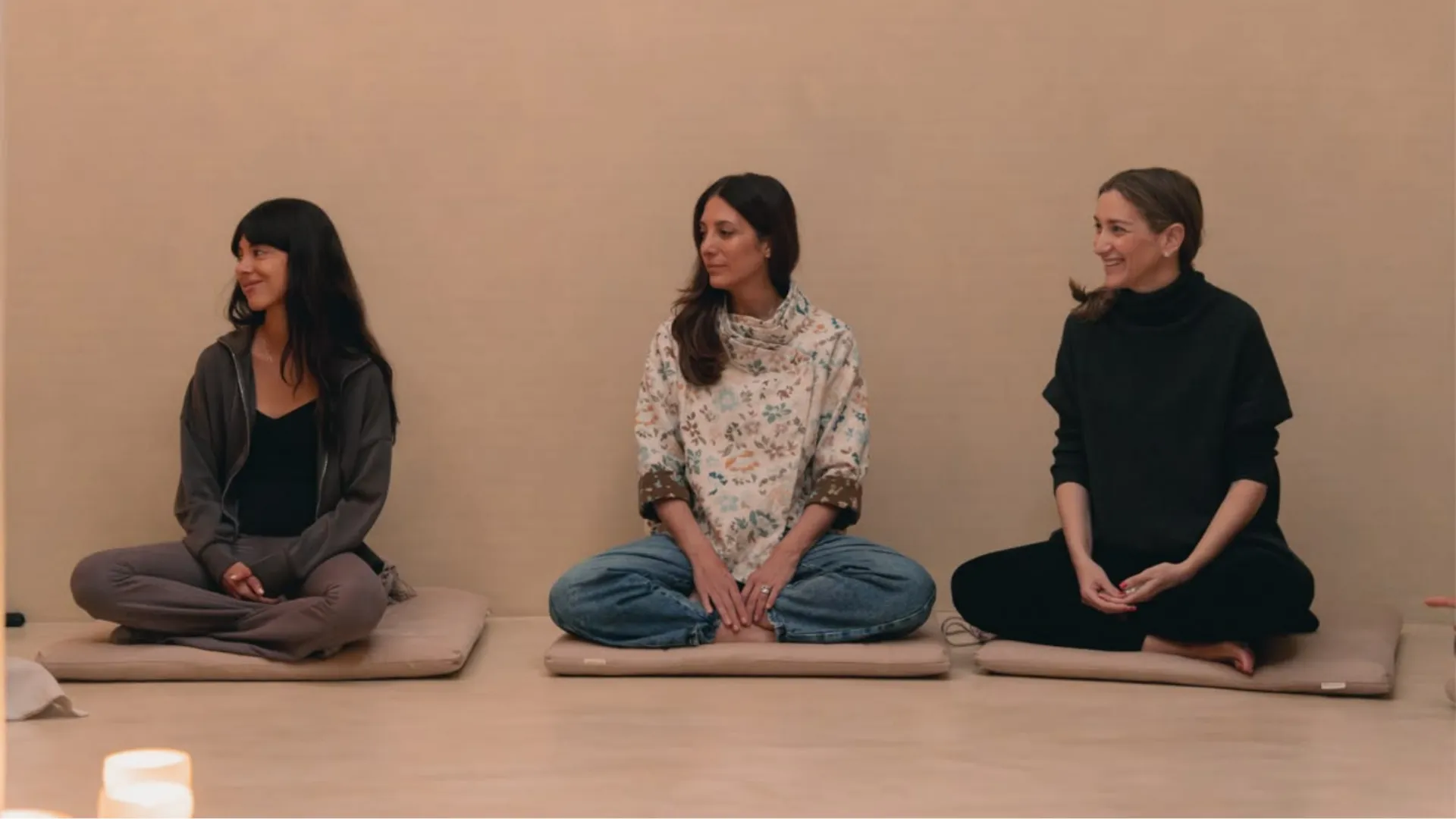
4. Consider LA Travel Time and Online Options
A class may look ideal until you consider the trip. Check travel time during the actual session hours, along with parking and how the location fits your routine.
Meditation Town has centers in West Hollywood, Koreatown, North Hollywood, and Pasadena.
Find a Los Angeles-area meditation center.
When In-Person Classes May Suit You
An in-person class may appeal to you if you want a dedicated space away from home or prefer asking questions face to face.
When Online Classes May Suit You
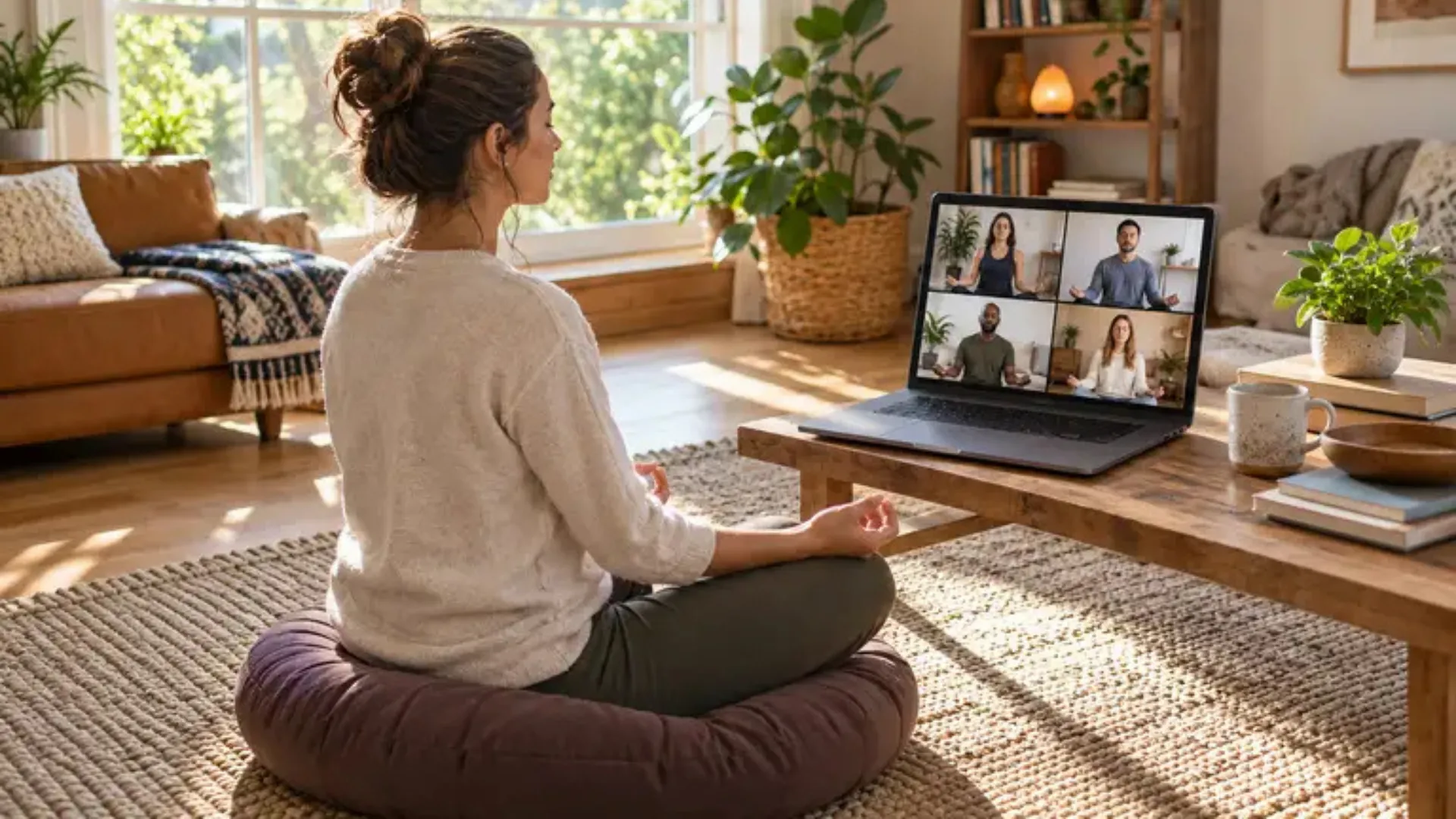
Live online classes may be more convenient if you want to avoid the commute or practice at home. Check the session’s time zone, device requirements, and whether you have a quiet place to participate.
Explore Meditation Town’s live online meditation classes.
Choose the format you can realistically return to—not just the one that sounds appealing on paper.
5. Compare What the Price Includes
Two trial sessions may cost the same but offer different levels of instruction, practice time, and support.
Before paying, check:
What does the trial fee include?
Will I practice meditation or only hear an introduction?
What sessions are included in an ongoing membership?
What are the rescheduling, cancellation, and renewal terms?
Meditation Town offers a 45-minute trial session for $35, including an introduction to the method, guided practice, and time for questions. It is a way to explore the approach before deciding whether to continue.
Review the membership options for ongoing participation, and confirm current prices and terms when booking.
6. Read Specific Reviews, Then Evaluate Your Experience
Look beyond the star rating. Reviews are more useful when they explain what attending the class was like:
Were the instructions easy for a beginner to understand?
Did the instructor make time for questions?
Was the environment comfortable?
Was it practical to keep attending?
Use reviews to understand the teaching and setting. Someone else’s personal outcome does not tell you exactly what your experience will be.
After a trial, ask yourself: Did I understand the method? Could I ask the questions I needed to? Can I see myself continuing in this format?
Those answers can help you decide on your next step.
Frequently Asked Questions
Can I Join a Guided Meditation Class With No Experience?
Yes, if the class welcomes beginners. Check that it includes an introduction to the method and guidance for moments when your mind wanders. Meditation Town’s trial session is open to people with no previous meditation experience.
How Much Do Meditation Classes in Los Angeles Cost?
Prices vary by provider, session length, private or group format, and membership structure. As one specific example, Meditation Town’s trial costs $35 for 45 minutes. This is its introductory price, not a citywide average. Compare ongoing fees and what they include before choosing a longer program.
Can I Switch Between Online and In-Person Classes?
That depends on the provider and membership. Offering both formats does not necessarily mean both are included in one plan. Ask which sessions you can attend, whether additional fees apply, and how to book each format.
Find Out Whether Guided Meditation Is Right for You
In a 45-minute Meditation Town trial, you can learn how the method works, practice with an instructor, and ask questions.
Start with one session before deciding on a longer commitment. Choose live online guidance or an in-person trial at a Los Angeles-area center.
45 minutes · $35 · Online or in person
Book Your Trial →
Meditation should not replace medical or mental health care. If you need help with a health concern, consult an appropriate healthcare professional.[1]
References
National Center for Complementary and Integrative Health (NCCIH). Meditation and Mindfulness: Effectiveness and Safety. nccih.nih.gov
Meditation for Better Sleep: Can It Help When Your Mind Won’t Settle?
Your body feels tired, but the moment you turn off the light, your thoughts get louder. A conversation replays. Tomorrow’s responsibilities line up. Checking the time adds another worry: “I really need to fall asleep now.”
Meditation may help some people relax and improve sleep quality. It does not reliably make everyone fall asleep, and it should not replace treatment for persistent insomnia. [1][2]
A useful place to begin is a brief pause at the end of your day, without requiring yourself to feel a certain way afterward.
What Does Research Say About Meditation for Sleep?
A 2019 review examined 18 clinical trials involving 1,654 participants. Mindfulness meditation improved sleep quality compared with some nonspecific comparison programs. However, it did not show a clear advantage over established, evidence-based sleep treatments. [1]
The findings are not uniformly positive. The National Center for Complementary and Integrative Health notes that evidence is insufficient to recommend mindfulness alone as a treatment for insomnia. [2]
This makes meditation a reasonable practice to explore alongside healthy sleep habits and appropriate care. These findings do not establish that every meditation technique works equally well, or that MeditationTown’s specific program produces the same results.
Which Sleep Meditation Practice Should You Try?
Start with one approach that feels manageable. You do not need to complete several techniques in a single evening.
Mindfulness Through Breath Awareness
Sit comfortably, with your feet supported if you are using a chair. Close your eyes or rest your gaze somewhere comfortable.
Breathe at your usual pace. Notice one sensation, such as air moving through your nose or the gentle movement of your abdomen. There is no need to take unusually deep breaths or hold your breath.
When you realize you have been thinking about something else, return to that sensation. Noticing that your attention has wandered is part of the practice.
A Gentle Body Scan
If focusing on your breathing feels awkward, try noticing physical sensations instead.
Begin with your feet and gradually move your attention through your legs, torso, shoulders, and face. You might notice warmth, heaviness, tension, or very little at all.
If your jaw or shoulders feel tight, soften them as much as is comfortable. You do not have to make every muscle relax or find a particular sensation.
Guided Meditation for Sleep
Guided meditation describes how instructions are delivered. A recording or instructor can guide you through breath awareness, a body scan, or another approach.
Choose a voice and pace you find comfortable. If you listen on your phone, start the recording and put the screen aside so the practice does not become another stretch of browsing.
If any exercise increases discomfort or anxiety, open your eyes, notice your surroundings, or stop.
How Long Should You Meditate Before Bed?
Try about five minutes to begin. If that feels comfortable, you can extend the practice to ten minutes.
This is a manageable starting suggestion, not a scientifically established dose for improving sleep. A longer session is not automatically a better one.
Keep the routine simple:
Step | What to do |
|---|---|
Prepare | Finish what you are doing, silence notifications, and choose a comfortable place to sit. |
Practice | Spend a few minutes with either breath awareness or a gentle body scan. |
Finish | Notice how you feel without grading the session. If you are sleepy, go to bed. |
Meditation does not need to become another task you must perform perfectly. If you miss an evening, resume when it fits your schedule.
What If the Same Worries Keep Returning at Night?
A practical reminder and a repeated mental replay may need different responses.
Before getting into bed, try writing down what is on your mind and identifying whether there is a specific next step.
Thought | A possible next step |
|---|---|
“What if I forget tomorrow’s email?” | Add it to tomorrow’s task list. |
“I wish I had handled that conversation differently.” | Decide whether a follow-up is needed and, if so, when to do it. |
“What if I cannot sleep again tonight?” | Notice that you are monitoring and evaluating your sleep before it has happened. |
This is a brief way to put a concern on paper, not an assignment to solve every problem before bed. If writing makes you more alert or draws you into lengthy analysis, stop and consider doing it earlier in the evening.
For thoughts that repeatedly return to past conversations, read why you keep replaying conversations in your head.
What If Meditation Does Not Help You Sleep?
Sleep is influenced by habits, surroundings, and health conditions. Difficulty sleeping does not mean you are failing at meditation.
Alongside your practice, review a few basics: keep a consistent wake-up time, make your bedroom dark and quiet, and avoid caffeine close to bedtime. [3]
If trouble falling or staying asleep keeps recurring and affects your daytime life, speak with a healthcare professional. Cognitive behavioral therapy for insomnia, or CBT-I, is generally recommended as the first treatment for long-term insomnia. Meditation should not delay an assessment or replace appropriate care. [3]
Frequently Asked Questions
Do I Need to Meditate Right Before Bed?
No. Choose a time that fits your evening, such as after finishing work or before your usual bedtime routine. If practicing immediately before bed feels frustrating or makes you more alert, try moving it earlier.
How Many Days Does Meditation Take to Improve Sleep?
There is no reliable timeline for an individual. Studies use different programs, practice schedules, and participant groups, so their results cannot promise a particular outcome for you. Avoid repeatedly extending sessions in pursuit of sleep; pay attention to your comfort and whether sleep difficulties are affecting daily life.
What If I Fall Asleep During Guided Meditation?
If you are listening as part of winding down for sleep, you do not need to stay awake just to finish the recording. Choose a comfortable volume and consider a sleep timer. Playing meditation audio throughout the night is not necessary to complete the practice.
Explore Letting Go With a Guide
If the thoughts that follow you to bed also occupy your daytime attention, you can set aside time to work with them before the end of the day.
MeditationTown’s Mind Cleansing approach guides you to look back on accumulated experiences, thoughts, and emotions and practice letting them go. Its approach differs from the breath-awareness practice described above. Explore how Mind Cleansing meditation works.
A guided trial gives you an opportunity to try the method and ask about the parts you find difficult to practice on your own. You can begin online or at a Los Angeles-area center.
Explore a Guided Trial →
References
[1] Rusch, H. L., et al. (2019). The effect of mindfulness meditation on sleep quality: a systematic review and meta-analysis of randomized controlled trials. Annals of the New York Academy of Sciences, 1445(1), 5–16.
[2] National Center for Complementary and Integrative Health. Mind and Body Practices for Sleep Disorders: What the Science Says.
[3] National Heart, Lung, and Blood Institute. Insomnia — Treatment.
These sources address general research on sleep, mindfulness, and insomnia treatment. They do not evaluate MeditationTown’s specific program or establish individual sleep outcomes.
What to Expect at Your First Meditation Class
You may be interested in meditation and still hesitate before booking. Will you have to sit perfectly still the whole time? What if your thoughts keep wandering? What if everyone else seems to know what to do?
Your first meditation class usually includes an introduction to the method, practice with an instructor, and time for questions. The details depend on the provider and the approach being taught.
At Meditation Town, a 45-minute guided trial costs $35. After a brief consultation and introduction, you spend most of the session practicing, with time to discuss your experience. You can join live online or in person at a Los Angeles-area center. No previous meditation experience is needed.
What Will You Learn in a Beginner Meditation Class?
It is easy to assume you need a quiet mind before you can meditate. You can begin with thoughts still on your mind.
Meditation Town teaches Mind Cleansing, an approach that guides you to look back on accumulated experiences, thoughts, and emotions and learn how to let them go. Work worries that follow you home, or a conversation you keep replaying, can provide a familiar starting point for understanding the practice.
Your guide explains what to do and supports you as you try it. You have someone to ask when “letting go” sounds clear in theory but feels unfamiliar in practice.
Explore the Mind Cleansing meditation method if you would like to understand the approach before your visit.
What Happens During Your First Meditation Session?
1. Talk About What Brought You Here
You do not need a carefully defined goal. Start with one situation you would like help navigating:
“I keep thinking about work after the day is over.”
“I have tried meditation videos, but I am not sure whether I am following them correctly.”
“I want to understand what it actually means to let go of a thought.”
These questions help your guide understand where you are starting. Share personal details only to the extent you feel comfortable.
2. Learn the Method and Practice With Your Guide
After a brief introduction, you begin practicing. Most of the trial is devoted to experiencing the method with guidance.
You learn to look at thoughts and experiences that come up and practice letting them go. If an instruction is unclear, or you are unsure which thought to work with, ask for help at that point.
You do not have to remember everything the first time. “Could you explain that part again?” is a useful question during a guided meditation session.
3. Discuss Your Experience and Next Steps
After practicing, talk about what made sense and where you felt stuck.
Specific observations give your guide something to respond to: “The same scene kept coming back,” or “I understood the explanation, but I was unsure what to do next.”
Your first session gives you a chance to begin learning how to work with recurring thoughts. You can use that experience to decide whether the approach feels right for you and whether you would like to continue.
How to Prepare for Your First Meditation Class
Wear Comfortable Clothing and Plan Your Seat
Choose clothes that allow you to sit comfortably without feeling restricted. There is no need to buy a special meditation outfit.
If sitting on the floor is difficult, ask about a chair or other seating arrangements before attending. For an online session, prepare a seat that supports your body comfortably.
If You Are Joining Online
A few practical checks can make it easier to settle into the session:
Confirm the time zone and read your joining instructions.
Charge your device and check its audio and microphone.
If using a smartphone, place it securely on a stand or stable surface.
Silence notifications and choose somewhere you can speak without frequent interruptions.
Use headphones if you prefer, and check the connection before the session begins.
You do not need to turn your home into a meditation studio. A comfortable place to hear the guide and ask questions is enough.
If You Are Visiting a Center
Check the Los Angeles-area meditation centers and review your booking information for arrival instructions, parking, and anything to bring. Ask ahead if you need help with access or seating.
Bring one question that connects the practice to your life. “How do I use this method when my mind is busy?” is a useful place to start.
What If Your Mind Keeps Wandering?
Having thoughts during a session does not mean you are doing everything wrong. Notice where you are getting stuck and ask how to apply the guidance.
You might find yourself thinking about tomorrow’s tasks or returning to a conversation from yesterday. Tell your guide what is happening. That gives you a specific question to work through together.
If you feel physically uncomfortable or emotionally overwhelmed, pause, adjust your position, or tell your guide. You do not have to push through distress to complete a session.
If persistent anxiety or stress is interfering with daily life, seek appropriate professional support. Meditation should not replace medical or mental health care.[1]
Should You Start Online or at a Los Angeles Center?
If you would prefer to begin at home without a commute, explore live online meditation classes. You can receive guidance and ask questions in real time.
An in-person session may suit you if home is distracting or you prefer learning face to face. Meditation Town has centers in West Hollywood, Koreatown, North Hollywood, and Pasadena.
Still comparing your options? Read how to choose a meditation class in Los Angeles. Once you can picture what your first session involves, choose a format and time that fit your day.
Frequently Asked Questions
How Long Is a First Meditation Class, and How Much Does It Cost?
Meditation Town’s guided trial lasts 45 minutes and costs $35. It includes a brief consultation and introduction, guided practice, and time for questions. You are not expected to spend the entire session sitting alone without instruction.
Other providers have different schedules and fees. Before booking, check whether an introductory appointment includes actual practice or is an information-only session.
Can I Attend With No Meditation Experience?
Yes. Meditation Town’s trial welcomes people who have never meditated before. You do not need to study meditation terminology or make your mind quiet before joining.
Your guide explains the method and helps you practice. Ask for clarification whenever an instruction feels unfamiliar or you find it difficult to follow.
What Can I Take Away From One Session?
You can learn how the method is taught, try it with guidance, and ask the questions you have been carrying. It is an opportunity to begin learning how to let go of recurring thoughts and understand what support would help you continue.
Some people feel lighter after a session; others need more time to become familiar with the practice. Consider whether you understood the approach, could ask for help, and would like to explore it further.
Take Your First Step With a Guide
If you are curious about meditation, a guided trial gives you time to try the practice and ask questions. Experience the approach before deciding how you would like to continue.
45 minutes · $35 · Live online or in person in the Los Angeles area
Book Your 45-Minute Trial →
References
[1] National Center for Complementary and Integrative Health (NCCIH). Meditation and Mindfulness: Effectiveness and Safety. General background and safety information. This source does not evaluate Meditation Town’s specific method or trial-session outcomes.
How to Choose the Best Meditation Class in Los Angeles
Finding a meditation class in Los Angeles can feel overwhelming when every option offers a different method, format, or price.
Start with six things: the meditation method, instructor experience, beginner support, location, schedule, and total cost. Ask what happens in the first session and whether you can try a class before committing to a membership.
A good fit is a class you can attend consistently, with guidance you understand and room to ask questions.
1. Start With What You Want to Learn
You do not need a perfect goal. Start with one situation you would like help navigating.
If this sounds familiar… | Ask the provider… |
My mind feels too busy to meditate alone. | How do you guide someone when their attention wanders? |
I am new to meditation and unsure where to start. | Will you explain the method step by step? |
My schedule makes it hard to stay consistent. | What session times and online options are available? |
I want to explore a deeper personal practice. | What will I learn, and how does the program progress? |
Be specific when you can. Instead of “I want less stress,” try “I keep thinking about work after I get home.” That gives you a clearer starting point for discussing the guidance you need.
2. Compare the Method and the Class Format
What you learn and how you learn it are separate questions.
Mindfulness involves paying attention to present-moment experience, while mantra-based practices may use a repeated word or sound.[1] Guided meditation describes instruction led by a teacher, so it can accompany different methods.
Meditation Town’s Mind Cleansing approach guides participants to reflect on accumulated experiences and thoughts and learn how to let them go.
Explore the Mind Cleansing meditation method.
Next, compare how the instruction is delivered.
Class format | What to ask |
Private sessions | Can the guidance adapt to my questions and pace? |
Group sessions | How many people attend, and when can I ask questions? |
Live online classes | Can I interact directly with the instructor? |
Recorded sessions | Is additional support available if I get stuck? |
These formats can overlap. An online class may be private or group-based, so check what the provider actually offers.
3. Look for Clear Guidance for Beginners
An instructor’s background matters, and so does their ability to explain the practice clearly. The National Center for Complementary and Integrative Health recommends asking about a meditation instructor’s training and experience.[1]
Before enrolling, ask:
What will I learn in my first session?
How do you teach someone with no meditation experience?
What happens if I struggle to follow along or keep getting distracted?
Can I pause or adjust the practice if I feel uncomfortable?
You do not need to be “good at meditation” before taking a class. Look for an environment where you can ask for help as you learn.
4. Consider LA Travel Time and Online Options
A class may look ideal until you consider the trip. Check travel time during the actual session hours, along with parking and how the location fits your routine.
Meditation Town has centers in West Hollywood, Koreatown, North Hollywood, and Pasadena.
Find a Los Angeles-area meditation center.
When In-Person Classes May Suit You
An in-person class may appeal to you if you want a dedicated space away from home or prefer asking questions face to face.
When Online Classes May Suit You
Live online classes may be more convenient if you want to avoid the commute or practice at home. Check the session’s time zone, device requirements, and whether you have a quiet place to participate.
Explore Meditation Town’s live online meditation classes.
Choose the format you can realistically return to—not just the one that sounds appealing on paper.
5. Compare What the Price Includes
Two trial sessions may cost the same but offer different levels of instruction, practice time, and support.
Before paying, check:
What does the trial fee include?
Will I practice meditation or only hear an introduction?
What sessions are included in an ongoing membership?
What are the rescheduling, cancellation, and renewal terms?
Meditation Town offers a 45-minute trial session for $35, including an introduction to the method, guided practice, and time for questions. It is a way to explore the approach before deciding whether to continue.
Review the membership options for ongoing participation, and confirm current prices and terms when booking.
6. Read Specific Reviews, Then Evaluate Your Experience
Look beyond the star rating. Reviews are more useful when they explain what attending the class was like:
Were the instructions easy for a beginner to understand?
Did the instructor make time for questions?
Was the environment comfortable?
Was it practical to keep attending?
Use reviews to understand the teaching and setting. Someone else’s personal outcome does not tell you exactly what your experience will be.
After a trial, ask yourself: Did I understand the method? Could I ask the questions I needed to? Can I see myself continuing in this format?
Those answers can help you decide on your next step.
Frequently Asked Questions
Can I Join a Guided Meditation Class With No Experience?
Yes, if the class welcomes beginners. Check that it includes an introduction to the method and guidance for moments when your mind wanders. Meditation Town’s trial session is open to people with no previous meditation experience.
How Much Do Meditation Classes in Los Angeles Cost?
Prices vary by provider, session length, private or group format, and membership structure. As one specific example, Meditation Town’s trial costs $35 for 45 minutes. This is its introductory price, not a citywide average. Compare ongoing fees and what they include before choosing a longer program.
Can I Switch Between Online and In-Person Classes?
That depends on the provider and membership. Offering both formats does not necessarily mean both are included in one plan. Ask which sessions you can attend, whether additional fees apply, and how to book each format.
Find Out Whether Guided Meditation Is Right for You
In a 45-minute Meditation Town trial, you can learn how the method works, practice with an instructor, and ask questions.
Start with one session before deciding on a longer commitment. Choose live online guidance or an in-person trial at a Los Angeles-area center.
45 minutes · $35 · Online or in person
Book Your Trial →
Meditation should not replace medical or mental health care. If you need help with a health concern, consult an appropriate healthcare professional.[1]
References
National Center for Complementary and Integrative Health (NCCIH). Meditation and Mindfulness: Effectiveness and Safety. nccih.nih.gov
Real Experiences
What Our Members Are Saying
5.0
Google Rating • 230+ Reviews
5.0 Google Rating
230+ Reviews
My focus has improved, and I feel more peaceful and aware in daily life. I feel lighter, brighter, and more open to new opportunities.

Alice A
Singer | North Hollywood
Meditation helps me dwell less on the past, worry less about the future, and experience the present moment more fully.

Paul W
Director of Animation Company | Toluca Lake
My anxiety and depression are gone. I feel happier, more active, and I no longer feel overwhelmed or worried about the future.

Gary A
Musician | West Hollywood
This meditation helped me work through emotional scars and let go of negative energy that had been affecting my daily life.

Emily W
Video Editor | Los Angeles
I was very stressed and overwhelmed before meditation. Now my mind feels clearer, and I’m able to enjoy life much more.

Autumn H
Registered Nurse | North Hollywood
This unique meditation helped me let go and changed the way I experience life. I feel happier than I can remember.

Melissa G
Psychotherapist | Studio City
This meditation helped me let go of mental burdens, understand myself more clearly, and experience a greater sense of freedom and peace.

Roy
Actor | Hollywood
I sleep better, feel calmer and more focused, and have experienced relief from TMJ pain and healthier, more positive relationships.

Molly W
Council Member | Vancouver
Meditation helped reduce my stress and anxiety. I feel calmer, more energetic, more optimistic, and better able to focus at work.

Tamara Y
PhD., Med Spa Doctor | Beverly Hills
My focus has improved, and I feel more peaceful and aware in daily life. I feel lighter, brighter, and more open to new opportunities.
Alice A
Singer | North Hollywood
Meditation helps me dwell less on the past, worry less about the future, and experience the present moment more fully.
Paul W
Director of Animation Company | Toluca Lake
My anxiety and depression are gone. I feel happier, more active, and I no longer feel overwhelmed or worried about the future.
Gary A
Musician | West Hollywood
This meditation helped me work through emotional scars and let go of negative energy that had been affecting my daily life.
Emily W
Video Editor | Los Angeles
I was very stressed and overwhelmed before meditation. Now my mind feels clearer, and I’m able to enjoy life much more.
Autumn H
Registered Nurse | North Hollywood
This unique meditation helped me let go and changed the way I experience life. I feel happier than I can remember.
Melissa G
Psychotherapist | Studio City
This meditation helped me let go of mental burdens, understand myself more clearly, and experience a greater sense of freedom and peace.
Roy
Actor | Hollywood
I sleep better, feel calmer and more focused, and have experienced relief from TMJ pain and healthier, more positive relationships.
Molly W
Council Member | Vancouver
Meditation helped reduce my stress and anxiety. I feel calmer, more energetic, more optimistic, and better able to focus at work.
Tamara Y
PhD., Med Spa Doctor | Beverly Hills
